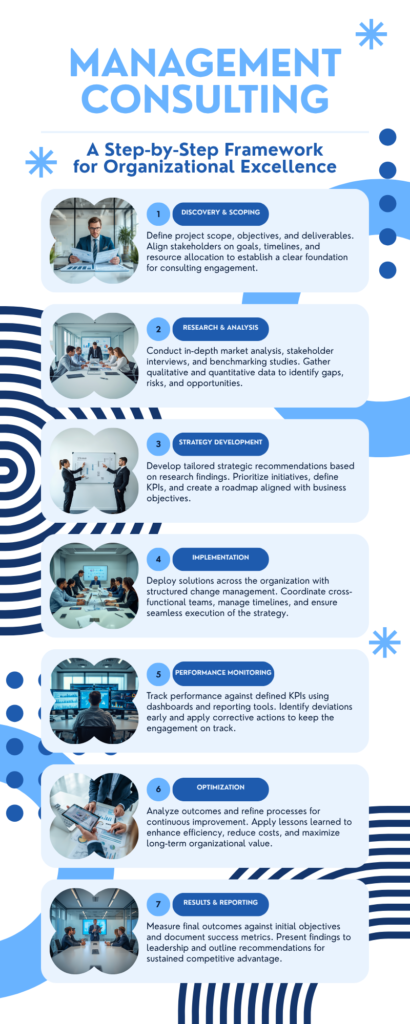
Transformation should begin with a clear diagnosis, not a software purchase.
A practical business review asks:
Where does the company create the most value?
Which processes cause delays, errors or unnecessary costs?
Which customers, products, services and markets are most profitable?
What is preventing the team from executing consistently?
Which risks could disrupt growth?
What should success look like in 90 days, 12 months and three years?
The purpose of consulting is to convert these questions into priorities, ownership and measurable action. A strong transformation roadmap normally identifies a small number of high-impact initiatives, names the accountable owner for each one and connects every initiative to a commercial result.
This discipline matters because technology performs best inside a well-designed operating model. The ONS found that firms with stronger management practices were more likely to adopt advanced technologies and to follow through on planned AI adoption (Office for National Statistics, 2025b).
What to measure: gross margin, process cycle time, error rate, customer retention, employee capacity and delivery reliability.